
Teaching hospital · Department planning
Emergency / casualty
These are the items commonly listed for the Emergency / casualty department. Tick the ones you need in your list and add your own quantities.
- 34items listed
- 4groups
- 32named in official documents
34 items in 4 groups below. Tap a group to open it; tap “About this item” to read more. Lists are for planning; please follow current official norms.
What the regulations say
32 of 34 items on this page are named in IPHS 2022 (govt benchmark), NMC UG form 2023, NMC UG-MSR 2023. 0 have a figure that depends on MBBS seats.
Figures come from NMC and government documents dated up to February 2026. Many are minimums. Items marked in grey are government benchmarks (for example IPHS 2022), not binding on private colleges. Check the current official norms before ordering.
Resuscitation
6 items
Oxygen supply NMC UG-MSR 2023About this item
What it is: A source of medical oxygen, either cylinders or a piped supply.
How it is used: Used in emergency departments to give oxygen to patients with breathing problems, injuries or shock.
Used in: Emergency / casualty
Options: Buyers choose between cylinders with regulators and central piped oxygen.
Ventilators NMC UG-MSR 2023About this item
What it is: Machines that support or take over breathing by moving air and oxygen into and out of the lungs.
How it is used: Used in cardiology, cardiac surgery, emergency, pulmonary and rehabilitation units for patients with breathing failure, and for resident training.
Used in: CVTS, Cardiology, Emergency / casualty, Emergency Medicine, Physical Medicine & Rehabilitation, Pulmonary Medicine
Options: Buyers choose ICU, transport or non-invasive models, and adult or paediatric capability.
Defibrillator NMC UG-MSR 2023About this item
What it is: A device that delivers a controlled electric shock to the heart to restore a normal rhythm during certain life-threatening heart rhythm problems.
How it is used: Kept in emergency, ICU, dialysis, medicine and other clinical areas for cardiac arrest, and used to train students and staff in resuscitation.
Used in: Dialysis, Emergency / casualty, General Medicine, Gynaecological Oncology, ICU and HDU, Paediatrics, Physical Medicine & Rehabilitation, Pulmonary Medicine and more
Options: Buyers choose between manual, semi-automatic and AED models, with or without pacing and monitoring features.
Fully equipped disaster/emergency trolleys NMC UG-MSR 2023About this item
What it is: A wheeled emergency or disaster cart supplied with the drugs, airway devices, dressings and instruments commonly needed for resuscitation and trauma care.
How it is used: Kept in the casualty area so staff can move all emergency supplies to a patient's bedside at once during critical situations or when many patients arrive together.
Used in: Emergency / casualty
Options: Buyers choose trolley material, drawer count and accessories such as oxygen cylinder holder, defibrillator tray and IV pole.
Emergency X-ray NMC UG-MSR 2023About this item
What it is: An X-ray machine placed in or near the emergency department, either fixed in a room or mobile on wheels.
How it is used: Used to quickly X-ray injured or acutely ill patients, such as for fractures and chest problems, without delay.
Used in: Emergency / casualty
Options: Buyers choose between fixed and mobile units and analogue, CR or digital imaging.
- Investigation facilities NMC UG-MSR 2023
Inspection checklist
8 items
Central oxygen and suction NMC UG form 2023About this item
What it is: A piped system that delivers oxygen and suction to wall outlets near patient beds.
How it is used: Used in emergency departments to give oxygen and clear airways quickly for incoming patients.
Used in: Emergency / casualty
Pulse oximeter NMC UG form 2023About this item
What it is: A small device that clips onto a finger and measures blood oxygen level and pulse rate using light.
How it is used: Used in dialysis units, emergency areas and labour rooms for quick checks of oxygen level and pulse.
Used in: Dialysis, Emergency / casualty, Labour room
Options: Buyers choose between fingertip, hand-held and table-top models, with adult or paediatric probes.
Ambu bag NMC UG form 2023About this item
What it is: A hand-squeezed self-inflating bag with a face mask, also called a bag-valve-mask, used to push air or oxygen into the lungs of someone not breathing adequately.
How it is used: Kept in the emergency department for resuscitation and patient transfer, and widely used to teach students basic life support.
Used in: Emergency / casualty
Options: Available in adult, child and infant sizes, in reusable silicone or single-use versions.
Ultrasonography machine NMC UG form 2023About this item
What it is: A machine that uses high-frequency sound waves to produce live images of organs and tissues inside the body.
How it is used: Used in emergency departments for quick bedside checks for internal bleeding, fluid around the heart or lungs, and to guide procedures.
Used in: Emergency / casualty
Options: Buyers choose between portable and cart-based units and probe types.
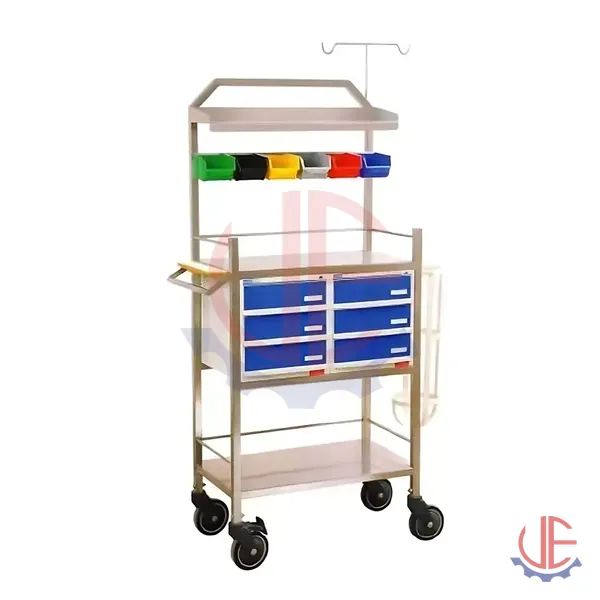
- Crash cart NMC UG form 2023About this item
What it is: A crash cart is a wheeled cabinet with labelled drawers and shelves that holds emergency drugs, airway items and resuscitation equipment in one place.
How it is used: It is kept ready in emergency, ICU, labour room and other clinical areas so staff can quickly bring everything needed during a cardiac arrest or emergency.
Used in: Cardiology, Dermatology, Emergency / casualty, General Medicine, ICU and HDU, Labour room, Palliative Medicine, Physical Medicine & Rehabilitation and more
Options: Buyers choose between steel and ABS bodies, number of drawers, and accessories such as a defibrillator shelf, cylinder holder or CPR board.
Emergency drug tray NMC UG form 2023About this item
What it is: A tray or box with labelled compartments that holds commonly used emergency medicines, syringes and needles so they can be found quickly.
How it is used: Kept in the emergency or casualty area so staff can quickly reach the right medicine during an emergency; it is checked and restocked regularly.
Used in: Emergency / casualty
Options: Buyers choose between open trays, lidded boxes and lockable cases, in plastic or steel.
- Minor OT NMC UG form 2023
- Plaster room NMC UG form 2023
Emergency
17 items
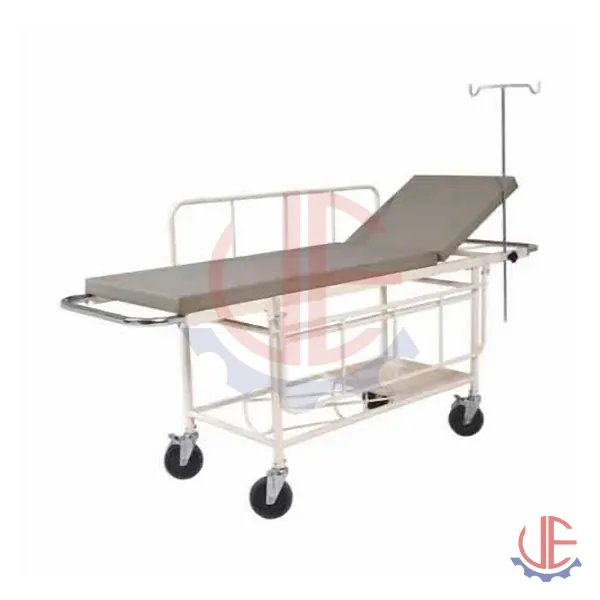
- Resuscitation bed IPHS 2022 (govt benchmark)About this item
What it is: A resuscitation bed is a sturdy, wheeled bed or trolley designed for emergency care, usually with a firm surface and adjustable backrest and height.
How it is used: It is used in the emergency department to receive seriously ill or injured patients and allow teams to perform resuscitation and urgent procedures.
Used in: Emergency / casualty
Options: Buyers choose between manual and hydraulic or electric adjustment and whether an X-ray-compatible top is needed.
Multipara monitors IPHS 2022 (govt benchmark)About this item
What it is: A bedside electronic monitor that shows several vital signs at once on a screen, such as heart tracing (ECG), blood pressure, oxygen level, pulse and temperature.
How it is used: Used in emergency areas, wards and specialty units to observe acutely ill patients continuously, and in teaching students how to read monitor displays.
Used in: Emergency / casualty, Emergency Medicine, General Medicine, Paediatrics, Pulmonary Medicine, Respiratory Medicine
Options: Buyers choose by number of parameters, screen size, portability and central-station connectivity.
Laryngoscopes (adult and paediatric) IPHS 2022 (govt benchmark)About this item
What it is: Lighted instruments with adult and child-size blades used to view the voice box and insert a breathing tube.
How it is used: Used in the emergency department to secure the airway of adults and children who cannot breathe adequately on their own.
Used in: Emergency / casualty
Options: Buyers choose blade types, LED or bulb lighting, and reusable or disposable blades.
Oxygen cylinder D-type IPHS 2022 (govt benchmark)About this item
What it is: A medical oxygen cylinder of the D size, a portable size commonly used with a regulator and flowmeter.
How it is used: Used in the emergency department to give oxygen during transfers and as a backup to piped oxygen.
Used in: Emergency / casualty
Options: Buyers choose with or without regulator, flowmeter and trolley.
Electric suction machine IPHS 2022 (govt benchmark)About this item
What it is: A powered pump that creates suction to remove fluids such as blood, saliva or vomit from the airway or a wound.
How it is used: Used in the emergency department to clear patients' airways quickly and remove blood or other fluids during urgent procedures.
Used in: Emergency / casualty
Options: Options include portable or trolley-mounted models, and units with battery backup.
Defibrillators IPHS 2022 (govt benchmark)About this item
What it is: Devices that give an electric shock to the heart to reset a dangerous rhythm, often with a screen showing heart rhythm.
How it is used: Used in cardiology, cardiac surgery and emergency departments to treat cardiac arrest and rhythm problems, and for resuscitation training.
Used in: CVTS, Cardiology, Emergency / casualty, Emergency Medicine
Options: Buyers choose manual, semi-automatic or AED models, with options such as pacing and printer.
Mechanical ventilators (red beds) IPHS 2022 (govt benchmark)About this item
What it is: Breathing machines that support or take over a patient's breathing; 'red beds' refers to the highest-priority resuscitation beds in the emergency area.
How it is used: Used at emergency resuscitation beds to support breathing in critically ill or injured patients before they move to the ICU.
Used in: Emergency / casualty
Options: Buyers choose between full ICU ventilators and compact emergency or transport ventilators.
Infusion pump IPHS 2022 (govt benchmark)About this item
What it is: An electronic device that delivers intravenous fluids or medicines into a patient's vein at a set, controlled rate.
How it is used: Used in emergency, ICU, obstetrics and cancer surgery units to give fluids and medicines accurately over time, and to teach staff safe infusion practice.
Used in: Emergency / casualty, ICU and HDU, Obstetrics & Gynaecology, Surgical Oncology
Options: Buyers choose between volumetric and syringe-type pumps, single or multi-channel, and models with drug libraries.
Ultrasonic nebuliser IPHS 2022 (govt benchmark)About this item
What it is: A nebuliser that uses high-frequency vibrations to turn liquid medicine into a very fine mist for breathing in.
How it is used: Used in the emergency department to give inhaled medicines quickly and quietly to patients with breathing problems.
Used in: Emergency / casualty
Options: Models differ in medicine cup size and tabletop or portable design.
ECG machine IPHS 2022 (govt benchmark)About this item
What it is: An electrocardiograph (ECG) machine records the heart's electrical activity through electrodes placed on the chest and limbs, and prints or displays the tracing.
How it is used: Used in dialysis units, emergency areas and paediatrics to check heart rhythm in patients quickly and record the tracing.
Used in: Dialysis, Emergency / casualty, Paediatrics
Options: Buyers choose between single and multi-channel machines, and portable or trolley-mounted models.
Transport monitor IPHS 2022 (govt benchmark)About this item
What it is: A compact, battery-powered patient monitor that shows vital signs such as heart rhythm, oxygen level and blood pressure, designed to travel with the patient.
How it is used: Used when moving seriously ill patients from casualty to wards, ICU or imaging, so staff can keep watching vital signs during transfer.
Used in: Emergency / casualty
Options: Models differ in screen size, number of parameters measured and mounting options.
Transport ventilator IPHS 2022 (govt benchmark)About this item
What it is: A compact, portable breathing machine with battery power, designed to keep ventilating a patient while they are being moved.
How it is used: Used to transfer ventilated patients between the emergency department, ICU, theatres and imaging without interrupting breathing support.
Used in: Emergency / casualty, ICU and HDU
Options: Buyers choose pneumatic or electronic models and those with non-invasive modes.
Glucometer IPHS 2022 (govt benchmark)About this item
What it is: A glucometer is a small handheld device that measures blood sugar from a drop of blood placed on a test strip.
How it is used: It is used in emergency, ICU, labour room and community settings to check blood sugar quickly at the bedside or in the field.
Used in: Community Medicine, Emergency / casualty, ICU and HDU, Labour room
Options: Buyers choose models by strip availability, memory and data download features.
Ophthalmoscope IPHS 2022 (govt benchmark)About this item
What it is: A hand-held instrument with a light and lenses that lets the examiner look through the pupil at the back of the eye.
How it is used: Used in clinical examination and teaching to view the retina and optic nerve, as part of eye and general physical examination.
Used in: Clinical Immunology & Rheumatology, Community Medicine, Emergency / casualty, Physiology
Options: Buyers choose between direct and indirect types, LED or halogen light, and rechargeable or battery handles.
Splints IPHS 2022 (govt benchmark)About this item
What it is: Splints are rigid or semi-rigid supports used to hold an injured limb or joint still; common types include padded boards, malleable aluminium, inflatable and traction splints.
How it is used: Used in the emergency department to stabilise suspected fractures and injuries before X-ray or treatment, and to teach students how to immobilise limbs.
Used in: Emergency / casualty
Options: Buyers choose between types such as malleable, vacuum, inflatable and traction splints, in adult and paediatric sizes.
Crash cart with emergency medicines IPHS 2022 (govt benchmark)About this item
What it is: A wheeled emergency trolley with drawers, stocked with essential emergency medicines and resuscitation supplies ready for immediate use.
How it is used: Used in emergency and casualty areas so staff can respond quickly when a patient's condition suddenly worsens.
Used in: Emergency / casualty
Options: Buyers choose trolley size and drawer layout; medicine contents are usually decided by the hospital.
Anaphylaxis tray IPHS 2022 (govt benchmark)About this item
What it is: A prepared tray or kit that holds the medicines and supplies needed to respond quickly to a severe allergic reaction (anaphylaxis).
How it is used: Kept ready in emergency areas and wherever injections are given, so staff can act immediately if a serious allergic reaction occurs.
Used in: Emergency / casualty
Options: Buyers choose between trays and portable kit boxes, with contents set by the hospital.
Furniture
3 items
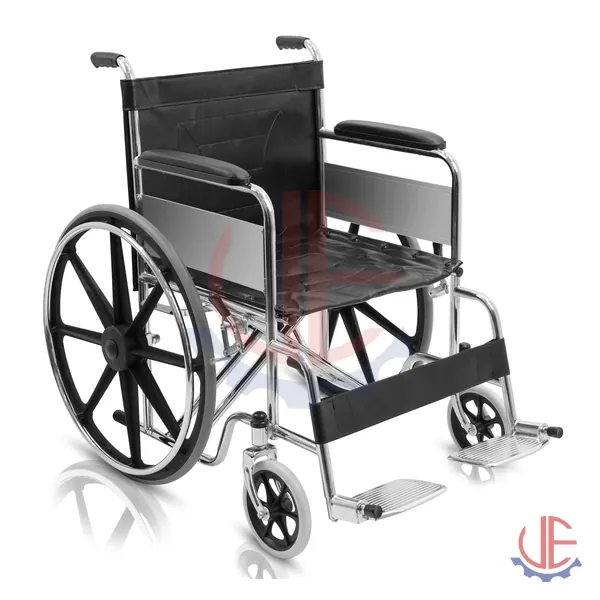
- Wheelchair About this item
What it is: A wheelchair is a chair with large wheels that allows a person who cannot walk easily to be moved or to move themselves.
How it is used: It is used across OPDs, wards, emergency and physiotherapy areas to move patients safely between departments, tests and treatment areas.
Used in: Dermatology, ENT, Emergency / casualty, General Medicine, General Surgery, ICU and HDU, Obstetrics & Gynaecology, Ophthalmology and more
Options: Buyers choose between foldable and fixed frames, self-propelled and attendant-pushed models, and steel or lighter frames.
- Triage chairs About this item
What it is: A triage chair is a sturdy chair, sometimes with armrests, where walking patients sit while their condition is quickly assessed.
How it is used: It is used in the emergency department's triage area to seat patients during initial assessment and vital-sign checks before they are directed for care.
Used in: Emergency / casualty
Options: Options include plain, cushioned and reclining models.
- Crash cart NMC UG form 2023About this item
What it is: A crash cart is a wheeled cabinet with labelled drawers and shelves that holds emergency drugs, airway items and resuscitation equipment in one place.
How it is used: It is kept ready in emergency, ICU, labour room and other clinical areas so staff can quickly bring everything needed during a cardiac arrest or emergency.
Used in: Cardiology, Dermatology, Emergency / casualty, General Medicine, ICU and HDU, Labour room, Palliative Medicine, Physical Medicine & Rehabilitation and more
Options: Buyers choose between steel and ABS bodies, number of drawers, and accessories such as a defibrillator shelf, cylinder holder or CPR board.
How Unnat Exports helps with Emergency / casualty
- One list, one quotation
Every item for Emergency / casualty, from equipment to furniture, quoted together, item-wise, with GST shown.
- Matched to the documents
Item names follow the wording used in NMC and government planning documents, so your list reads the way inspectors expect.
- Help with specifications
Not sure which model or size? Our team goes through the options with you before quoting.
- Supply across India
Delivery and installation for your city are confirmed in the quotation.
Before you finalise your Emergency / casualty list
- Check your MBBS intake and any PG seats; several quantities scale with them.
- Compare the list with the current official norms for your college. The table above shows which items the documents name.
- Measure the rooms, labs or wards so furniture and equipment fit.
- Decide which items you already have and which need replacing.
- Note any tender or department specifications you must follow.
Send this checklist with your list and we will quote against it.
Common questions
What does Unnat Exports supply for the Emergency / casualty department?
Items from the resuscitation, inspection checklist, emergency groups on this page, plus furniture for the Furniture. Most of them fall under critical care, emergency & respiratory support, hospital furniture & patient handling, diagnostic instruments, vital signs & weighing.
Do I have to buy everything on this list?
No. The list shows items commonly bought for this department. You choose the items and quantities you need; every quantity box starts empty.
Do you also supply furniture for the Emergency / casualty department?
Yes. This page lists furniture for the furniture. Tell us your room sizes in the note box if you need custom sizes.
Is this the official list of requirements?
No. It is a planning list to help you prepare your purchase. Please check the current official norms that apply to your college, such as the National Medical Commission documents, before you finalise quantities.
How do I get a quotation for Emergency / casualty?
Open the list builder, tick the items, type your quantities and send the list. You can also send the list you already have on WhatsApp at 94674 67836.
Can you help me choose models and specifications?
Yes. When you send your list, tick “I need help choosing specifications” and our team will call you to go through the options before quoting.
Ready to get a quotation?
Tick what you need, type your quantities, and send the list to Unnat Exports. Or just message us on WhatsApp.