
Teaching hospital · Department planning
ENT
These are the items commonly listed for the ENT department. Tick the ones you need in your list and add your own quantities.
- 86items listed
- 6groups
- 47named in official documents
86 items in 6 groups below. Tap a group to open it; tap “About this item” to read more. Lists are for planning; please follow current official norms.
What the regulations say
47 of 86 items on this page are named in IPHS 2022 (govt benchmark), NMC Form-B 2024. 0 have a figure that depends on MBBS seats.
| Item | Source | 50 seats | 100 seats | 150 seats |
|---|---|---|---|---|
| Teaching beds — ENT UG-MSR bed table | NMC UG-MSR 2023 | 10 | 20 | 20 |
Figures come from NMC and government documents dated up to February 2026. Many are minimums. Items marked in grey are government benchmarks (for example IPHS 2022), not binding on private colleges. Check the current official norms before ordering.
Equipment
47 items
- Audiometry room NMC Form-B 2024
- Speech therapy room NMC Form-B 2024
- Minor OT attached to OPD NMC Form-B 2024
- Temporal bone dissection lab NMC Form-B 2024
- Endoscopic sinus surgery lab NMC Form-B 2024
Operating microscope with teaching aid NMC Form-B 2024About this item
What it is: An operating microscope for ear, nose and throat surgery with an extra attachment, such as a second eyepiece or a camera, so others can watch.
How it is used: ENT surgeons use it for fine ear and throat surgery, while students and residents follow the procedure through the teaching attachment or a screen.
Used in: ENT
Options: Buyers choose between a co-observer eyepiece and a video camera system, and floor or wall mounting.
High-speed drill NMC Form-B 2024About this item
What it is: A high-speed drill is a powered surgical drill with fine burrs for precise removal of bone.
How it is used: Used in ENT surgery, especially ear and mastoid operations and some sinus and skull base procedures.
Used in: ENT
Options: Options include electric or air-powered drills and a range of handpieces and burrs.
Flexible fibreoptic bronchoscope / nasopharyngolaryngoscope NMC Form-B 2024About this item
What it is: A thin flexible scope passed through the nose to view the nose, back of the throat, voice box and upper airway.
How it is used: Used in ENT clinics and theatres to examine the throat and voice box, check swallowing and assess airway problems.
Used in: ENT
Options: Buyers choose between fibreoptic and video scopes and between different diameters.
Rigid paediatric bronchoscopy set NMC Form-B 2024About this item
What it is: A set of straight metal bronchoscope tubes in child sizes with light source attachments, telescopes and grasping forceps.
How it is used: Used by ENT surgeons to remove objects inhaled by children and to examine and treat their airways under anaesthesia.
Used in: ENT
Options: Sets vary in the range of tube sizes and the forceps included.
Rigid oesophagoscopy set NMC Form-B 2024About this item
What it is: A set of straight metal tubes with light attachments and grasping forceps used to view the food pipe.
How it is used: Used in ENT, usually under anaesthesia, to remove swallowed objects stuck in the food pipe and to examine or biopsy the area.
Used in: ENT
Options: Sets vary in tube sizes for adults and children and the forceps included.
Microlaryngoscopy set NMC Form-B 2024About this item
What it is: A microlaryngoscopy set includes laryngoscopes and fine long instruments used with an operating microscope to operate on the vocal cords.
How it is used: Used in ENT theatres for surgery on vocal cord nodules, polyps and other small voice box lesions, and for biopsies.
Used in: ENT
Options: Sets vary in laryngoscope sizes and microinstruments included.
Sinus endoscopy set NMC Form-B 2024About this item
What it is: A set of thin rigid telescopes and fine instruments used to see inside and operate on the nose and sinuses.
How it is used: Used in ENT for examining the nasal passages and for functional endoscopic sinus surgery to clear blocked sinuses and remove polyps.
Used in: ENT
Options: Sets vary in telescope viewing angles and the number of cutting and grasping instruments.
Mastoidectomy set NMC Form-B 2024About this item
What it is: A mastoidectomy set is a collection of surgical instruments used for operations on the mastoid bone behind the ear.
How it is used: Used in ENT theatres for surgery to clear infection or disease from the mastoid and middle ear, and for training residents in ear surgery.
Used in: ENT
Options: Sets vary in the number and types of instruments included.
Tympanoplasty set NMC Form-B 2024About this item
What it is: A tympanoplasty set is a collection of fine ear instruments used to repair the eardrum and middle ear.
How it is used: Used in ENT theatres for eardrum repair surgery under a microscope, and for training residents in ear surgery.
Used in: ENT
Options: Sets vary in the range of microinstruments included.
Stapes surgery set NMC Form-B 2024About this item
What it is: A stapes surgery set is a group of very fine instruments used to operate on the stapes, a tiny bone in the middle ear.
How it is used: Used in ENT theatres for stapedotomy or stapedectomy, operations to improve certain types of hearing loss.
Used in: ENT
Options: Sets vary in the range of microinstruments included.
Direct laryngoscopy set NMC Form-B 2024About this item
What it is: A direct laryngoscopy set includes rigid laryngoscopes, light sources and instruments used to view the voice box directly.
How it is used: Used in ENT theatres to examine the larynx under anaesthesia, take biopsies and remove small lesions.
Used in: ENT
Options: Sets vary in scope sizes and the accessory instruments included.
Septoplasty set NMC Form-B 2024About this item
What it is: A septoplasty set is a collection of instruments used to straighten the nasal septum, the wall dividing the nose.
How it is used: Used in ENT theatres for septoplasty surgery to improve nasal breathing, and for training residents.
Used in: ENT
Options: Sets vary in the number and type of instruments included.
Tonsillectomy set NMC Form-B 2024About this item
What it is: A tonsillectomy set is a group of surgical instruments, such as mouth gags, dissectors and snares, used to remove the tonsils.
How it is used: Used in ENT theatres for removal of the tonsils and often adenoids, one of the common ENT operations.
Used in: ENT
Options: Sets vary by adult or paediatric sizes and the instruments included.
Maxillectomy set NMC Form-B 2024About this item
What it is: A maxillectomy set is a group of surgical instruments used to remove part or all of the upper jaw bone (maxilla).
How it is used: Used in ENT and head-and-neck surgery, mainly for tumours of the upper jaw and sinuses.
Used in: ENT
Options: Sets vary by the range of bone-cutting and soft-tissue instruments included.
Microdebrider NMC Form-B 2024About this item
What it is: A microdebrider is a powered instrument with a rotating blade and suction that cuts and removes soft tissue precisely.
How it is used: Used in ENT surgery, especially endoscopic sinus surgery, nasal polyp removal and some throat procedures.
Used in: ENT
Options: Buyers choose the console and blades for sinus, adenoid or laryngeal use.
Coblator system NMC Form-B 2024About this item
What it is: A coblator system uses radiofrequency energy passed through saline to remove or shrink soft tissue at relatively low temperatures.
How it is used: Used in ENT operating theatres for procedures such as tonsillectomy, adenoidectomy and reducing nasal turbinates.
Used in: ENT
Options: Buyers choose the console and a range of procedure-specific wands.
Digital mono and bipolar cautery NMC Form-B 2024About this item
What it is: An electrosurgical unit with a digital display offering both monopolar (current passes through the body to a pad) and bipolar (current between forceps tips) modes.
How it is used: Used in ENT surgery to cut tissue and control bleeding in the nose, throat and ear.
Used in: ENT
Options: Models differ in power range, cutting modes and accessories.
Nerve stimulator / monitor NMC Form-B 2024About this item
What it is: A device that stimulates nerves and records the response so surgeons can locate and check nerves during an operation.
How it is used: Used in ENT surgery, such as ear, parotid and thyroid operations, to help protect important nerves.
Used in: ENT
Options: Buyers choose simple stimulators or multi-channel monitoring systems.
HD digital camera with recording system NMC Form-B 2024About this item
What it is: A high-definition camera connected to a recording system.
How it is used: Used in ENT to record examinations and procedures, such as endoscopy views, for teaching and records.
Used in: ENT
Options: Options include camera heads for scopes and stand-alone recorders.
OAE NMC Form-B 2024About this item
What it is: An OAE (otoacoustic emissions) device measures faint sounds produced by the inner ear in response to clicks or tones.
How it is used: Used in ENT for quick hearing screening, especially in newborns and children, and to check inner ear function.
Used in: ENT
Options: Options include handheld screening units and diagnostic systems.
BERA NMC Form-B 2024About this item
What it is: BERA (brainstem evoked response audiometry) measures electrical signals from the hearing nerve and brainstem in response to sounds.
How it is used: Used in ENT to test hearing in babies, children and uncooperative patients, and to investigate certain nerve-related hearing problems.
Used in: ENT
Options: Systems may offer BERA alone or combined with OAE testing.
Impedance audiometer NMC Form-B 2024About this item
What it is: An impedance audiometer (tympanometer) measures how the eardrum and middle ear respond to changes in air pressure and sound.
How it is used: Used in ENT to assess middle ear problems such as fluid behind the eardrum or eardrum stiffness, and to test ear reflexes.
Used in: ENT
Options: Options include screening and diagnostic models.
Pure tone audiometer NMC Form-B 2024About this item
What it is: A pure tone audiometer plays tones of different pitches and loudness through headphones to measure a person's hearing level.
How it is used: Used in ENT to test hearing and record an audiogram, which helps diagnose the type and degree of hearing loss.
Used in: ENT
Options: Options include portable screening units and clinical diagnostic models.
- Sleep lab (in institute) NMC Form-B 2024
Ear and nose surgery simulators NMC Form-B 2024About this item
What it is: These are training models of the ear and nose that copy their internal structure, so procedures can be practised outside a patient.
How it is used: ENT residents and students use them to practise examination and surgical steps on the ear and nose in a safe, repeatable setting.
Used in: ENT
Options: Buyers choose between ear-only, nose and sinus, or combined models, and physical or screen-based simulators.
CO2 laser NMC Form-B 2024About this item
What it is: A surgical laser that uses carbon dioxide gas to produce a beam that can cut or remove tissue precisely.
How it is used: Used in ENT and gynae-oncology departments to remove abnormal tissue, for example in the throat, voice box or cervix.
Used in: ENT, Gynaecological Oncology
Options: Choices include power range, delivery by arm or fibre, and microscope or scanner attachments.
Other lasers NMC Form-B 2024About this item
What it is: Additional medical lasers apart from CO2 lasers, such as diode, KTP or holmium lasers, used for specific surgical tasks.
How it is used: Used in ENT departments for procedures in the nose, throat and ear where a precise or bloodless cut is needed.
Used in: ENT
Options: Buyers choose the laser type and power according to the procedures planned.
Harmonic scalpel NMC Form-B 2024About this item
What it is: An ultrasonic surgical instrument whose blade vibrates very fast to cut tissue and seal blood vessels at the same time, with less heat spread than electric cautery.
How it is used: Used in ENT surgery such as thyroid and head and neck operations to dissect tissue with limited bleeding.
Used in: ENT
Options: Options include different handpiece shapes and lengths for open or keyhole surgery.
Stroboscope / high-speed camera NMC Form-B 2024About this item
What it is: A stroboscope or high-speed camera captures the fast vibration of the vocal cords so it can be seen in slow motion.
How it is used: Used in ENT voice clinics to assess voice disorders and vocal cord movement, and to record examinations for teaching.
Used in: ENT
Options: Buyers choose between stroboscopy systems and high-speed video systems.
Suction machine NMC Form-B 2024About this item
What it is: An electric pump with tubing and a collection jar that removes fluids such as mucus, blood or saliva.
How it is used: Used in ENT clinics and theatres to clear the nose, ear and throat during procedures, and in the labour room to clear newborns' airways.
Used in: ENT, Labour room
Options: Options include portable or trolley-mounted units and low or high-flow models.
Narrow band imaging NMC Form-B 2024About this item
What it is: An imaging feature in some endoscopy systems that uses filtered blue and green light to make blood vessels and surface patterns stand out.
How it is used: Used in ENT to spot early or suspicious changes in the lining of the throat, voice box and mouth, and to guide biopsies.
Used in: ENT
Options: It is usually supplied as a feature of a compatible video endoscopy system rather than as a separate device.
Ear and nasal suction machine IPHS 2022 (govt benchmark)About this item
What it is: An ear and nasal suction machine is a small electric pump with tubing and tips that removes discharge and secretions from the ear and nose.
How it is used: Used in ENT clinics to clean the ear canal and nasal passages during examination and minor procedures.
Used in: ENT
Options: Options include portable and cabinet-mounted units with different suction tips.
Jobson Horne probe IPHS 2022 (govt benchmark)About this item
What it is: A Jobson Horne probe is a thin metal instrument with a small loop at one end and a serrated tip at the other.
How it is used: Used in ENT clinics to clean the ear canal, remove wax and small foreign bodies, and hold cotton for mopping the ear.
Used in: ENT
Head lamp IPHS 2022 (govt benchmark)About this item
What it is: A head lamp is a light worn on the doctor's head that shines directly where the doctor is looking, leaving both hands free.
How it is used: Used in ENT clinics for examining the ear, nose and throat and for minor procedures.
Used in: ENT
Options: Options include LED or halogen lights and rechargeable or mains-powered models.
Nasal speculum IPHS 2022 (govt benchmark)About this item
What it is: A nasal speculum is a small instrument with two blades that gently opens the nostril for examination.
How it is used: Used in ENT clinics to view the inside of the nose during examination and minor procedures.
Used in: ENT
Options: Available in different sizes and blade lengths for adults and children.
Laryngeal mirror IPHS 2022 (govt benchmark)About this item
What it is: A laryngeal mirror is a small, round mirror set at an angle on a long thin handle, used to view areas of the throat indirectly.
How it is used: Used in ENT clinics to see the back of the throat and voice box (larynx) by indirect viewing, and to teach students throat examination.
Used in: ENT
Options: Available in sets of different mirror sizes.
Nasopharyngeal mirrors IPHS 2022 (govt benchmark)About this item
What it is: Nasopharyngeal mirrors are small angled mirrors used to view the area behind the nose (nasopharynx) through the mouth.
How it is used: Used in ENT clinics to examine the back of the nose for swelling, growths or blockage, and to teach students postnasal examination.
Used in: ENT
Options: Available in sets of different mirror sizes.
Aural speculum IPHS 2022 (govt benchmark)About this item
What it is: An aural speculum is a small funnel-shaped instrument inserted into the ear canal to give a clear view of the canal and eardrum.
How it is used: Used in ENT clinics during ear examination and minor ear procedures, usually with a head light or otoscope.
Used in: ENT
Options: Available in sets of different sizes, in metal or disposable plastic.
Siegle's speculum IPHS 2022 (govt benchmark)About this item
What it is: Siegle's speculum is an ear speculum with a magnifying lens and a rubber bulb that can change air pressure in the ear canal.
How it is used: Used in ENT clinics to check how freely the eardrum moves and to examine the eardrum under magnification.
Used in: ENT
Tuning fork 512 Hz IPHS 2022 (govt benchmark)About this item
What it is: A tuning fork is a two-pronged metal instrument that produces a clear tone when struck. The 512 Hz fork is the frequency commonly used for hearing tests.
How it is used: Used in ENT clinics for bedside hearing tests such as the Rinne and Weber tests, and to teach students basic hearing assessment.
Used in: ENT
Bayonet forceps IPHS 2022 (govt benchmark)About this item
What it is: Bayonet forceps are angled forceps shaped so the hand does not block the view, used for fine work in the nose and ear.
How it is used: Used in ENT clinics and theatres for placing or removing nasal packs, removing foreign bodies and handling small items.
Used in: ENT
Options: Available in different lengths and tip types.
ENT examination chair IPHS 2022 (govt benchmark)About this item
What it is: An ENT examination chair is an adjustable patient chair designed to position the patient's head for ear, nose and throat examination.
How it is used: Used in ENT outpatient clinics so doctors can examine patients comfortably and safely at the correct height and angle.
Used in: ENT
Options: Options include manual, hydraulic and motorised chairs, sometimes as part of an ENT workstation.
Furniture — department office
9 items
Executive table for Head of Department About this item
What it is: A larger office desk for a department head, usually with drawers and a side unit for files.
How it is used: Used in the Head of Department's office for administrative work, meeting faculty and students, and managing department records.
Used in: Anaesthesiology, Anatomy, Biochemistry, Community Medicine, Dentistry, Dermatology, ENT, Forensic Medicine and more
Options: Choices include wooden or laminate finishes, with or without side return, and lockable pedestal drawers.
Revolving office chair About this item
What it is: An office chair that swivels on a base with wheels, usually with height adjustment and a cushioned seat and back.
How it is used: Used by faculty and office staff across departments at desks and computer tables for daily paperwork, computer work and record keeping.
Used in: Anaesthesiology, Anatomy, Biochemistry, Community Medicine, Dentistry, Dermatology, ENT, Forensic Medicine and more
Options: Options include mesh or cushioned backs, with or without armrests, medium or high back, and fabric or leatherette covers.
Visitor chairs About this item
What it is: A fixed-leg chair placed in front of a desk for guests, usually with a cushioned seat and sometimes armrests.
How it is used: Placed in front of office and department desks, where visitors, students, patients' relatives or colleagues sit during meetings.
Used in: Administration, Anaesthesiology, Anatomy, Biochemistry, Community Medicine, Dentistry, Dermatology, ENT and more
Options: Options include steel or wooden frames, cushioned or plain seats, with or without armrests, and fabric or leatherette covers.
Office table About this item
What it is: A standard working desk for office use, usually with one or more drawers.
How it is used: Used by faculty and office staff in departments for paperwork, record keeping and meeting students or colleagues.
Used in: Anaesthesiology, Anatomy, Biochemistry, Community Medicine, Dentistry, Dermatology, ENT, Forensic Medicine and more
Options: Options include steel, wooden or laminate construction, with or without lockable drawers, and different sizes.
Computer table About this item
What it is: A desk designed for a computer, usually with space for the monitor and often a sliding keyboard tray and CPU shelf.
How it is used: Used in department offices, the library and computer areas for staff and students to work on computers, records and online resources.
Used in: Anaesthesiology, Anatomy, Biochemistry, Central Library, Community Medicine, Dentistry, Dermatology, ENT and more
Options: Options include wooden, laminate or steel construction, with or without keyboard tray, CPU stand and drawers.
Steel almirah About this item
What it is: A tall steel cupboard with lockable doors and internal shelves for safe storage.
How it is used: Used across offices and departments to store files, records, stationery, teaching materials and other items that need to be kept locked.
Used in: Administration, Anaesthesiology, Anatomy, Biochemistry, Community Medicine, Dentistry, Dermatology, ENT and more
Options: Options include different heights, full or half shelves, with or without a locker compartment, and plain or glass-panel doors.
Filing cabinet About this item
What it is: A cabinet with deep pull-out drawers for keeping files and documents upright and organised, usually made of steel.
How it is used: Used in administrative and department offices to store student records, staff files, correspondence and other official documents.
Used in: Administration, Anaesthesiology, Anatomy, Biochemistry, Community Medicine, Dentistry, Dermatology, ENT and more
Options: Buyers choose between two-, three- or four-drawer models, with or without central lock, and steel or wooden construction.
Bookshelf / book rack About this item
What it is: A shelf unit for storing books, journals and files in an upright, easy-to-see arrangement.
How it is used: Used in department offices, seminar rooms and departmental libraries to keep reference books, journals, theses and records.
Used in: Anaesthesiology, Anatomy, Biochemistry, Community Medicine, Dentistry, Dermatology, ENT, Forensic Medicine and more
Options: Options include steel or wooden construction, open shelves or glass doors, with or without lock, and adjustable shelves.
Side rack About this item
What it is: A small rack or low cabinet placed beside a desk to hold files, books and frequently used items.
How it is used: Used next to desks in department offices and faculty rooms to keep working files, books and stationery within easy reach.
Used in: Anaesthesiology, Anatomy, Biochemistry, Community Medicine, Dentistry, Dermatology, ENT, Forensic Medicine and more
Options: Options include steel or wooden construction, open shelves or with doors, and with or without lock.
Furniture — faculty rooms
5 items
Office table About this item
What it is: A standard working desk for office use, usually with one or more drawers.
How it is used: Used by faculty and office staff in departments for paperwork, record keeping and meeting students or colleagues.
Used in: Anaesthesiology, Anatomy, Biochemistry, Community Medicine, Dentistry, Dermatology, ENT, Forensic Medicine and more
Options: Options include steel, wooden or laminate construction, with or without lockable drawers, and different sizes.
Revolving office chair About this item
What it is: An office chair that swivels on a base with wheels, usually with height adjustment and a cushioned seat and back.
How it is used: Used by faculty and office staff across departments at desks and computer tables for daily paperwork, computer work and record keeping.
Used in: Anaesthesiology, Anatomy, Biochemistry, Community Medicine, Dentistry, Dermatology, ENT, Forensic Medicine and more
Options: Options include mesh or cushioned backs, with or without armrests, medium or high back, and fabric or leatherette covers.
Visitor chairs About this item
What it is: A fixed-leg chair placed in front of a desk for guests, usually with a cushioned seat and sometimes armrests.
How it is used: Placed in front of office and department desks, where visitors, students, patients' relatives or colleagues sit during meetings.
Used in: Administration, Anaesthesiology, Anatomy, Biochemistry, Community Medicine, Dentistry, Dermatology, ENT and more
Options: Options include steel or wooden frames, cushioned or plain seats, with or without armrests, and fabric or leatherette covers.
Steel almirah About this item
What it is: A tall steel cupboard with lockable doors and internal shelves for safe storage.
How it is used: Used across offices and departments to store files, records, stationery, teaching materials and other items that need to be kept locked.
Used in: Administration, Anaesthesiology, Anatomy, Biochemistry, Community Medicine, Dentistry, Dermatology, ENT and more
Options: Options include different heights, full or half shelves, with or without a locker compartment, and plain or glass-panel doors.
Bookshelf / book rack About this item
What it is: A shelf unit for storing books, journals and files in an upright, easy-to-see arrangement.
How it is used: Used in department offices, seminar rooms and departmental libraries to keep reference books, journals, theses and records.
Used in: Anaesthesiology, Anatomy, Biochemistry, Community Medicine, Dentistry, Dermatology, ENT, Forensic Medicine and more
Options: Options include steel or wooden construction, open shelves or glass doors, with or without lock, and adjustable shelves.
Furniture — OPD
7 items
Doctor's table About this item
What it is: A working desk for a doctor, usually with drawers for forms, prescription pads and stationery.
How it is used: Used in consultation rooms and clinical department offices, where doctors see patients, review reports and write notes.
Used in: Anaesthesiology, Dentistry, Dermatology, ENT, General Medicine, General Surgery, Obstetrics & Gynaecology, Ophthalmology and more
Options: Buyers choose between steel, wooden or laminate tops, with or without lockable drawers, and different sizes.
Doctor's chair About this item
What it is: A comfortable office chair for a doctor, usually with cushioned seat and back, suited to long hours of sitting at a desk.
How it is used: Used by doctors in consultation rooms and department offices while examining records, talking to patients and writing prescriptions.
Used in: Anaesthesiology, Dentistry, Dermatology, ENT, General Medicine, General Surgery, Obstetrics & Gynaecology, Ophthalmology and more
Options: Options include revolving with wheels or fixed, with or without armrests, mesh or cushioned back, and height adjustment.
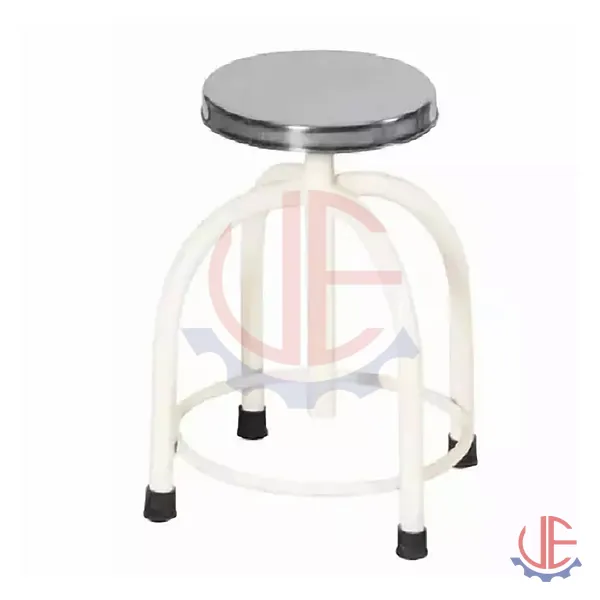 Patient stool About this item
What it is: A patient stool is a small, usually round stool, often revolving and height adjustable, on which a patient sits during consultation.
How it is used: It is used in OPD rooms so doctors and students can examine seated patients and turn them easily during examination.
Used in: Anaesthesiology, Dentistry, Dermatology, ENT, General Medicine, General Surgery, Obstetrics & Gynaecology, Ophthalmology and more
Options: Buyers choose between fixed and revolving tops, height adjustment, and steel or chrome frames.
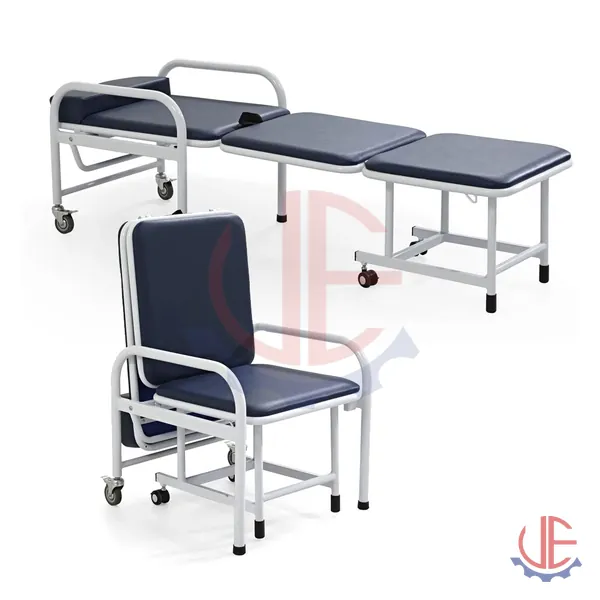 Attendant chair About this item
What it is: An attendant chair is a simple, sturdy chair for a patient's relative or attendant, usually with a metal frame and wipe-clean seat.
How it is used: It is placed in OPD rooms, wards and procedure areas so attendants can sit with patients during consultation, waiting or treatment.
Used in: Anaesthesiology, Dentistry, Dermatology, ENT, General Medicine, General Surgery, Obstetrics & Gynaecology, Ophthalmology and more
Options: Options include plain or cushioned seats, with or without armrests, and stackable designs.
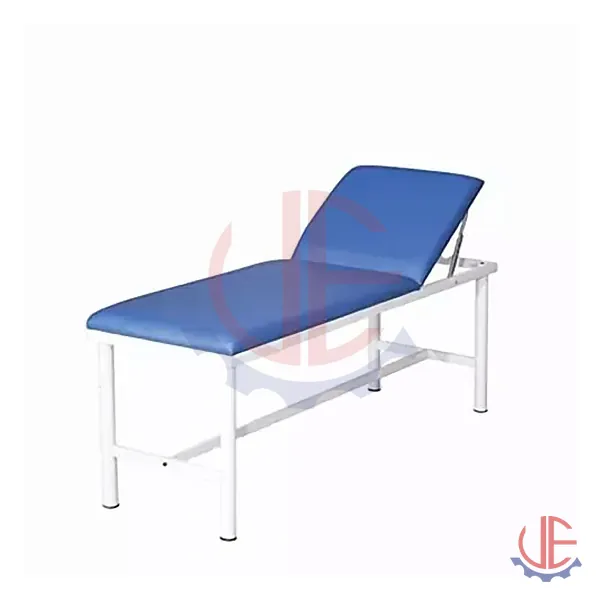 Examination couch About this item
What it is: An examination couch is a padded, raised table on which a patient lies or sits to be examined by a doctor.
How it is used: It is used in OPDs, wards and skills labs for physical examination of patients and for students to practise examination skills.
Used in: Anaesthesiology, Dentistry, Dermatology, ENT, General Medicine, General Surgery, Obstetrics & Gynaecology, Ophthalmology and more
Options: Buyers choose between fixed and adjustable backrest, with or without drawers, and steel or wooden frames.
Waiting area seating (3- and 4-seater) About this item
What it is: Linked seating units with three or four seats joined on one frame, designed for heavy public use.
How it is used: Placed in OPD waiting halls and corridors of clinical departments, where patients and attendants wait for registration and consultation.
Used in: Anaesthesiology, Dentistry, Dermatology, ENT, General Medicine, General Surgery, Obstetrics & Gynaecology, Ophthalmology and more
Options: Options include three- or four-seater units, perforated steel, moulded plastic or cushioned seats, and with or without armrests.
Registration / help-desk counter About this item
What it is: A front counter where staff sit to register patients, issue OPD cards and answer queries, often with a computer space.
How it is used: Placed at the entrance of clinical departments and OPDs, where patients register, get directions and receive help before consultation.
Used in: Anaesthesiology, Dentistry, Dermatology, ENT, General Medicine, General Surgery, Obstetrics & Gynaecology, Ophthalmology and more
Options: Buyers choose between wooden, laminate or steel construction, single or multi-window designs, and with or without glass screens.
Furniture — wards
14 items
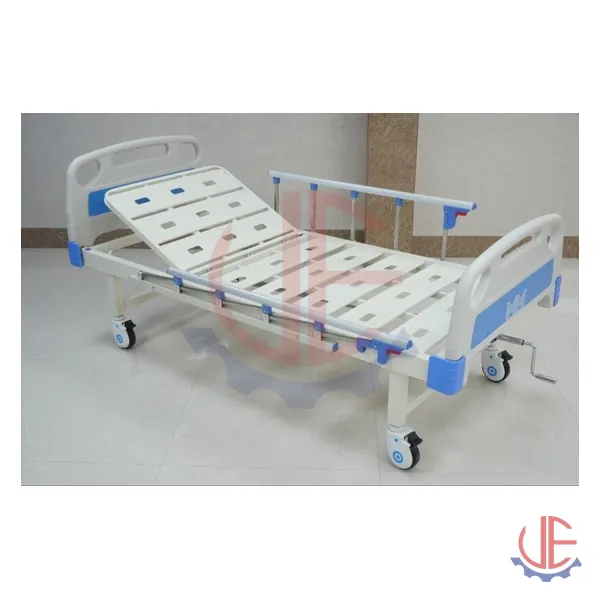 Hospital bed, two-function (manual) About this item
What it is: A two-function hospital bed is a manual bed where the backrest and knee section can be raised or lowered using hand cranks.
How it is used: It is used in general wards to help patients sit up, rest comfortably and be examined, and is a common bed type for teaching-hospital wards.
Used in: Dermatology, ENT, General Medicine, General Surgery, Obstetrics & Gynaecology, Ophthalmology, Orthopaedics, Paediatrics and more
Options: Buyers usually choose head and foot panel material, side-rail type, and castors versus fixed legs.
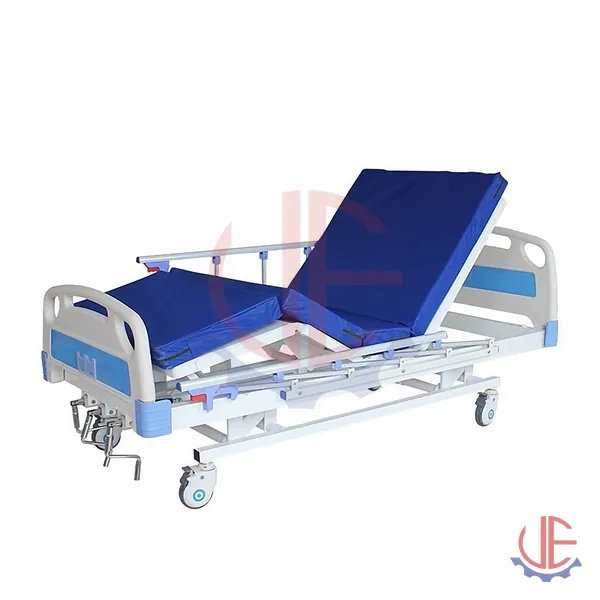
- Hospital bed, three-function / Fowler (manual) About this item
What it is: A three-function Fowler bed is a manual hospital bed whose backrest, knee section and overall height can be adjusted using hand cranks.
How it is used: It is used in wards to position patients for comfort, feeding, breathing and examination, and to bring the bed to a convenient working height for staff.
Used in: Dermatology, ENT, General Medicine, General Surgery, Obstetrics & Gynaecology, Ophthalmology, Orthopaedics, Paediatrics and more
Options: Buyers choose between ABS or steel head and foot panels, side-rail types, and castor sizes with or without brakes.
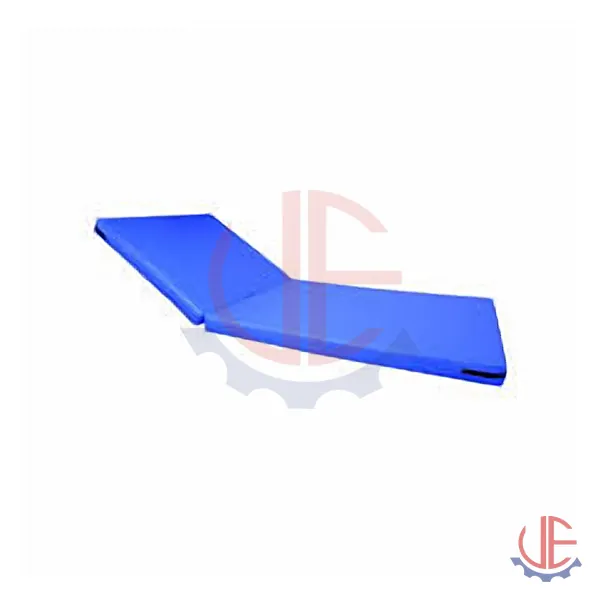 Hospital mattress About this item
What it is: A hospital mattress is a foam or similar mattress sized for hospital beds, usually covered with a waterproof, wipe-clean fabric.
How it is used: It is used on ward and examination beds to give patients a comfortable, hygienic surface that can be cleaned and disinfected between patients.
Used in: Dermatology, ENT, General Medicine, General Surgery, Obstetrics & Gynaecology, Ophthalmology, Orthopaedics, Paediatrics and more
Options: Buyers choose between foam densities, single-piece or sectional mattresses to match adjustable beds, and cover materials.
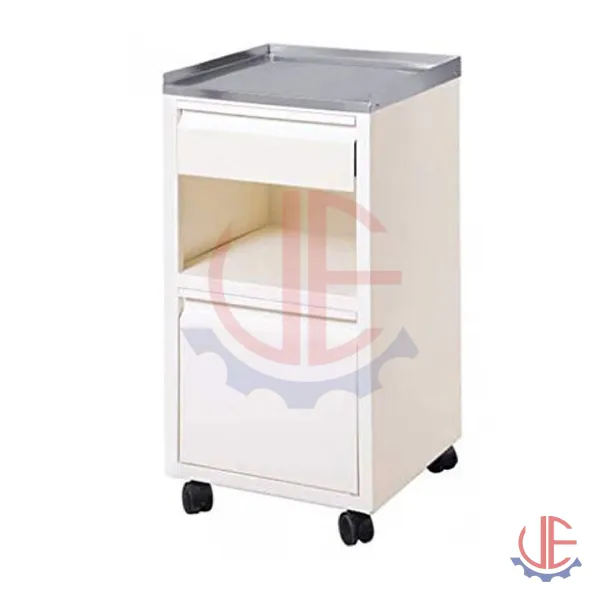
- Bedside locker About this item
What it is: A bedside locker is a small cabinet placed beside a hospital bed, usually with a drawer, a shelf or cupboard and a top surface.
How it is used: Patients use it to keep personal belongings, water and small items within reach, while staff use the top for temporary placement of items during care.
Used in: Dermatology, ENT, General Medicine, General Surgery, ICU and HDU, Obstetrics & Gynaecology, Ophthalmology, Orthopaedics and more
Options: Common choices are stainless-steel, powder-coated steel or moulded plastic bodies, with or without wheels.
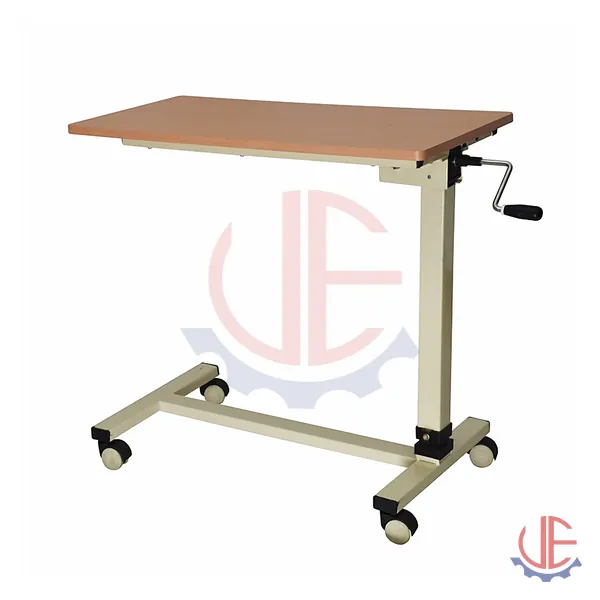 Overbed table About this item
What it is: An overbed table is a height-adjustable table on wheels with a top that slides over a hospital bed in front of the patient.
How it is used: It lets patients eat, read or keep items in front of them while in bed, and gives staff a working surface during bedside care.
Used in: Dermatology, ENT, General Medicine, General Surgery, ICU and HDU, Obstetrics & Gynaecology, Ophthalmology, Orthopaedics and more
Options: Common choices are stainless-steel, laminated or ABS tops and fixed or tilting table tops.
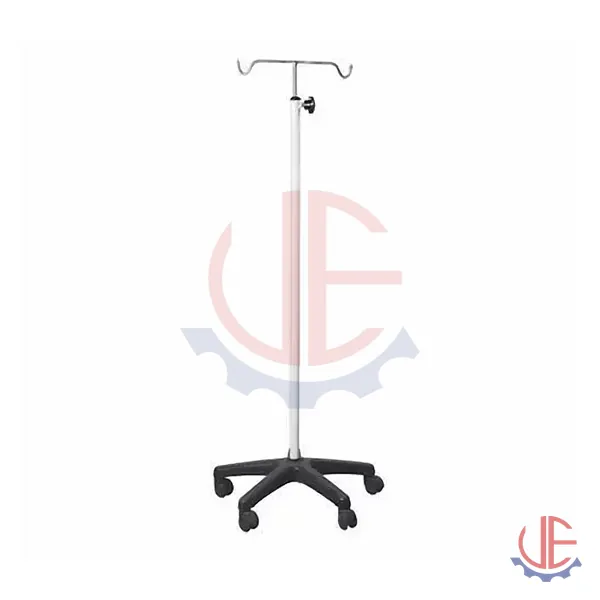 IV stand About this item
What it is: An IV stand, also called a drip stand, is a tall pole with hooks at the top and a wheeled or weighted base.
How it is used: It holds bottles or bags of intravenous fluids above the patient so fluids can flow into a vein, in wards, ICUs and procedure areas.
Used in: Dermatology, ENT, General Medicine, General Surgery, ICU and HDU, Obstetrics & Gynaecology, Ophthalmology, Orthopaedics and more
Options: Buyers choose between two-hook and four-hook tops, fixed or height-adjustable poles, and steel or chrome finish.
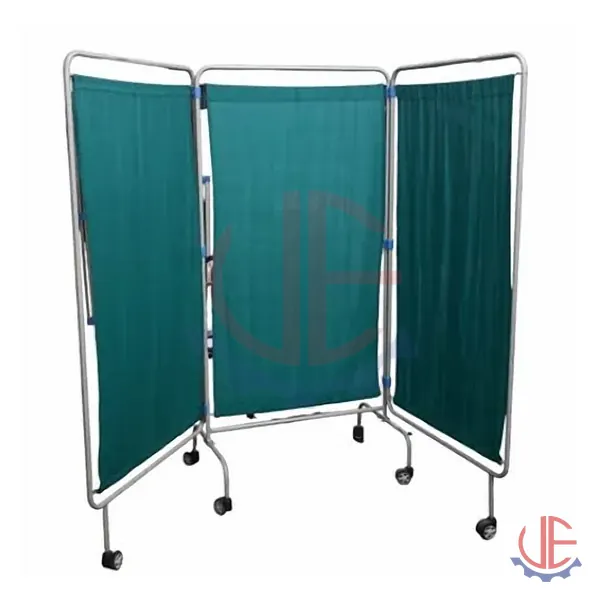
- Bedside screen About this item
What it is: A bedside screen is a movable, folding frame with fabric or panel sections that can be placed around a bed to create a private area.
How it is used: It gives patients privacy during examination, procedures, dressing changes or personal care in shared wards, including during student bedside teaching.
Used in: Dermatology, ENT, General Medicine, General Surgery, Obstetrics & Gynaecology, Ophthalmology, Orthopaedics, Paediatrics and more
Options: Common choices are two-, three- or four-panel folding screens, on wheels or fixed feet.
- Attendant chair About this item
What it is: An attendant chair is a simple, sturdy chair for a patient's relative or attendant, usually with a metal frame and wipe-clean seat.
How it is used: It is placed in OPD rooms, wards and procedure areas so attendants can sit with patients during consultation, waiting or treatment.
Used in: Anaesthesiology, Dentistry, Dermatology, ENT, General Medicine, General Surgery, Obstetrics & Gynaecology, Ophthalmology and more
Options: Options include plain or cushioned seats, with or without armrests, and stackable designs.
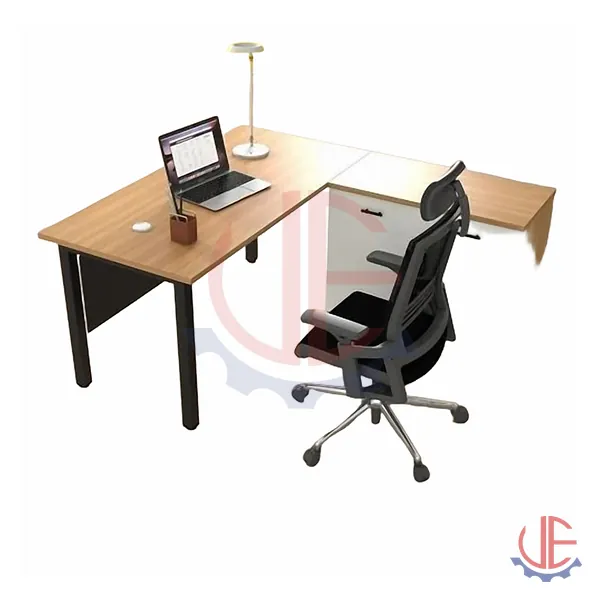 Nursing station counter with chairs About this item
What it is: A nursing station counter is a desk-like work counter, usually with storage and a writing surface, supplied with chairs for nursing staff.
How it is used: It serves as the central point in each ward or ICU where nurses keep records, monitor patients, store supplies and coordinate care.
Used in: Dermatology, ENT, General Medicine, General Surgery, ICU and HDU, Obstetrics & Gynaecology, Ophthalmology, Orthopaedics and more
Options: Buyers choose the counter size and shape, laminate or solid-surface tops, and number of chairs.
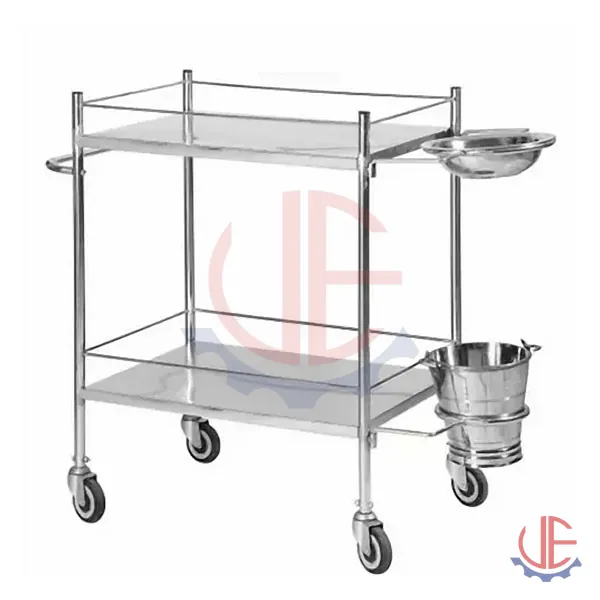 Dressing trolley About this item
What it is: A dressing trolley is a wheeled cart, usually stainless steel, with two shelves and sometimes holders for bowls and buckets.
How it is used: It carries sterile dressing materials, instruments and lotions to the bedside so staff can clean and dress wounds in wards and OPDs.
Used in: Dermatology, ENT, General Medicine, General Surgery, Obstetrics & Gynaecology, Ophthalmology, Orthopaedics, Paediatrics and more
Options: Common choices are trolley size, number of shelves, and with or without bowl and bucket holders.
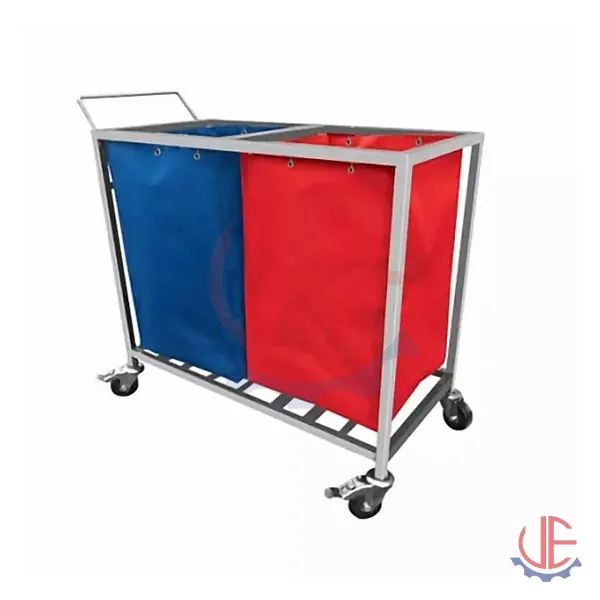 Linen trolley About this item
What it is: A linen trolley is a wheeled cart with shelves or bags used to carry and store bed sheets, gowns and other hospital linen.
How it is used: It is used in wards to bring clean linen to beds and to collect used linen separately for sending to the laundry.
Used in: Dermatology, ENT, General Medicine, General Surgery, Obstetrics & Gynaecology, Ophthalmology, Orthopaedics, Paediatrics and more
Options: Common choices are open-shelf clean-linen trolleys and bag-holder soiled-linen trolleys.
Instrument cabinet About this item
What it is: A closed cabinet, often with glass-fronted doors and shelves, for storing medical and surgical instruments in a clean, organised way.
How it is used: Clinical departments keep examination and procedure instruments in it, in wards, OPDs and teaching areas, so instruments are easy to find and protected from dust.
Used in: Dermatology, ENT, General Medicine, General Surgery, Obstetrics & Gynaecology, Ophthalmology, Orthopaedics, Paediatrics and more
Options: Buyers choose between stainless-steel and powder-coated steel bodies, glass or solid doors, and single or double-door sizes.
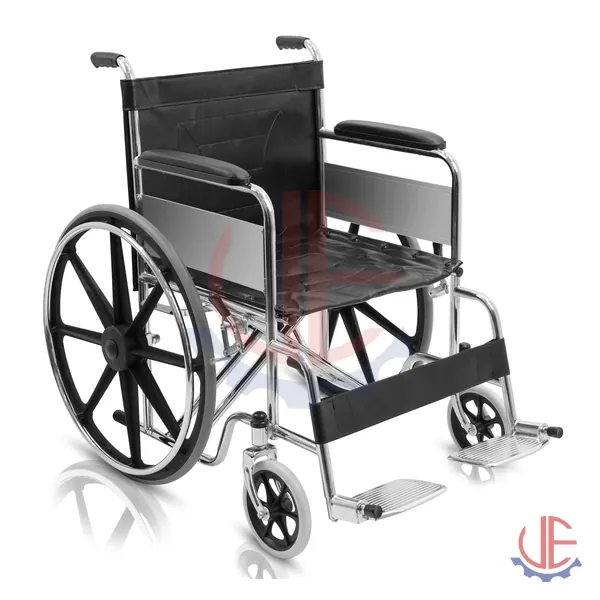 Wheelchair About this item
What it is: A wheelchair is a chair with large wheels that allows a person who cannot walk easily to be moved or to move themselves.
How it is used: It is used across OPDs, wards, emergency and physiotherapy areas to move patients safely between departments, tests and treatment areas.
Used in: Dermatology, ENT, Emergency / casualty, General Medicine, General Surgery, ICU and HDU, Obstetrics & Gynaecology, Ophthalmology and more
Options: Buyers choose between foldable and fixed frames, self-propelled and attendant-pushed models, and steel or lighter frames.
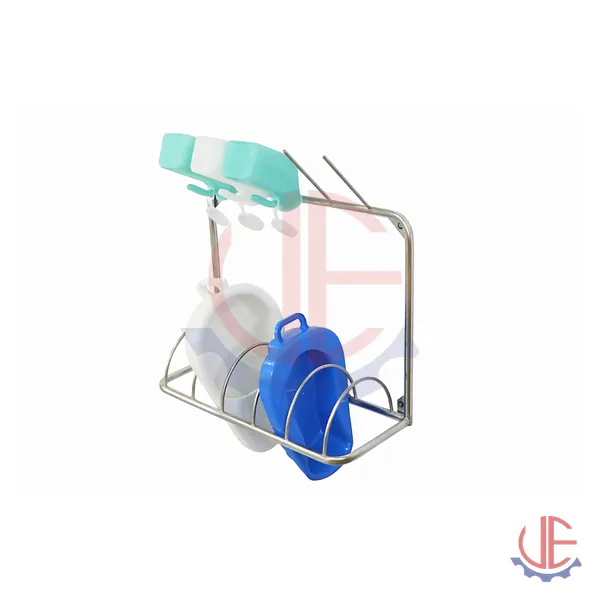
- Bed pan and urinal stand About this item
What it is: A bedpan and urinal stand is a small metal frame or rack that holds a bedpan and urine bottle beside the patient's bed.
How it is used: It keeps toileting items within reach of bed-bound ward patients and nursing staff, and stores them off the floor in a clean, orderly way.
Used in: Dermatology, ENT, General Medicine, General Surgery, Obstetrics & Gynaecology, Ophthalmology, Orthopaedics, Paediatrics and more
Options: Common choices are stainless-steel or powder-coated mild-steel frames, with or without wheels.
Furniture — teaching room
4 items
Student chair with writing pad About this item
What it is: A chair with a small attached writing surface on one arm, so a student can sit and write without a separate desk.
How it is used: Used in demonstration rooms, tutorial rooms and seminar halls, where students sit to attend small-group classes and take notes.
Used in: Anatomy, Biochemistry, Community Medicine, Dermatology, ENT, Forensic Medicine, General Medicine, General Surgery and more
Options: Options include steel or plastic frames, right- or left-hand writing pads, cushioned or plain seats, and with or without a storage tray.
Teacher's table and chair About this item
What it is: A desk with a matching chair for a teacher, usually with a drawer for notes, attendance registers and stationery.
How it is used: Placed at the front of demonstration rooms and practical labs, where the teacher sits to take attendance, prepare and conduct classes.
Used in: Anatomy, Biochemistry, Community Medicine, Dermatology, ENT, Forensic Medicine, General Medicine, General Surgery and more
Options: Buyers choose between steel, wooden or laminate desks, with or without lockable drawers, and fixed or revolving chairs.
Podium / lectern About this item
What it is: A stand with a sloping top for a teacher to rest notes while speaking, sometimes with a shelf below.
How it is used: Used in demonstration rooms and seminar rooms, where teachers stand to take classes, give presentations and conduct discussions.
Used in: Anatomy, Biochemistry, Community Medicine, Dermatology, ENT, Forensic Medicine, General Medicine, General Surgery and more
Options: Options include wooden or laminate finish, fixed or movable, and with or without a microphone mount.
White board / display board About this item
What it is: A wall board with either a white dry-erase writing surface or a pin-up display surface. Some models combine both on one board.
How it is used: Used in demonstration rooms, seminar rooms and department corridors for teaching, notices, timetables, charts and display of student work.
Used in: Anatomy, Biochemistry, Community Medicine, Dermatology, ENT, Forensic Medicine, General Medicine, General Surgery and more
Options: Common choices include white writing surface, soft pin-up board or combination board, magnetic surface, and wall-mounted or movable stand.
How Unnat Exports helps with ENT
- One list, one quotation
Every item for ENT, from equipment to furniture, quoted together, item-wise, with GST shown.
- Matched to the documents
Item names follow the wording used in NMC and government planning documents, so your list reads the way inspectors expect.
- Help with specifications
Not sure which model or size? Our team goes through the options with you before quoting.
- Supply across India
Delivery and installation for your city are confirmed in the quotation.
Before you finalise your ENT list
- Check your MBBS intake and any PG seats; several quantities scale with them.
- Compare the list with the current official norms for your college. The table above shows which items the documents name.
- Measure the rooms, labs or wards so furniture and equipment fit.
- Decide which items you already have and which need replacing.
- Note any tender or department specifications you must follow.
Send this checklist with your list and we will quote against it.
Common questions
What does Unnat Exports supply for the ENT department?
Items from the equipment groups on this page, plus furniture for the department office, faculty rooms, OPD. Most of them fall under ent & audiology equipment, office, classroom, library & hostel furniture, hospital furniture & patient handling.
Do I have to buy everything on this list?
No. The list shows items commonly bought for this department. You choose the items and quantities you need; every quantity box starts empty.
Do you also supply furniture for the ENT department?
Yes. This page lists furniture for the department office, faculty rooms, opd, wards, teaching room. Tell us your room sizes in the note box if you need custom sizes.
Is this the official list of requirements?
No. It is a planning list to help you prepare your purchase. Please check the current official norms that apply to your college, such as the National Medical Commission documents, before you finalise quantities.
How do I get a quotation for ENT?
Open the list builder, tick the items, type your quantities and send the list. You can also send the list you already have on WhatsApp at 94674 67836.
Can you help me choose models and specifications?
Yes. When you send your list, tick “I need help choosing specifications” and our team will call you to go through the options before quoting.
Ready to get a quotation?
Tick what you need, type your quantities, and send the list to Unnat Exports. Or just message us on WhatsApp.